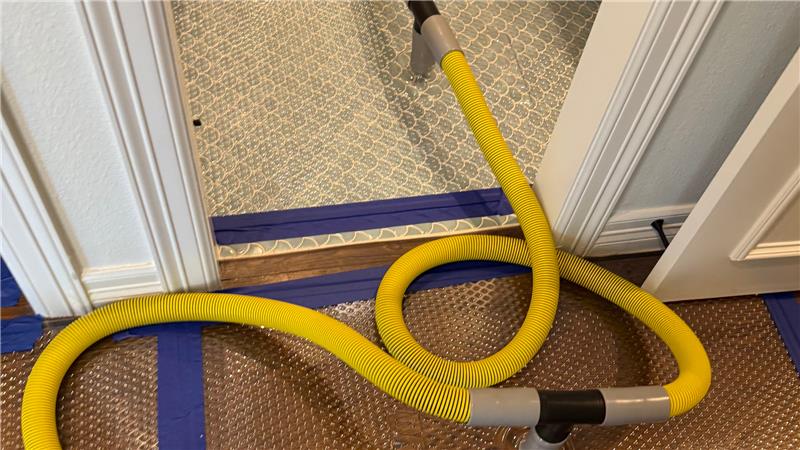
Rescue mats and Injectidry systems are the gold standard for restoring wet hardwood in North
Texas because they use high-pressure vacuum suction to pull moisture directly through the
wood’s grain and subfloor. Unlike traditional fans that only dry the surface, these systems
address the trapped water that causes permanent warping and mold. By creating an airtight
seal on the floor, they extract liquid and vapor from places that are otherwise unreachable
without tearing up the boards.
Why Is Surface Drying Insufficient for Solid Hardwood?
Hardwood is a dense, porous material that acts like a sponge when a pipe bursts or a sudden
North Texas storm hits Lewisville. While a standard air mover can dry the finish on top of the
wood, it cannot reach the moisture trapped in the tongue and groove joints or the subfloor
beneath. In the Texas heat, if this hidden water remains, the wood will continue to swell, leading
to cupping, where the edges of the boards rise higher than the center.
The real danger in Lewisville homes is the secondary damage caused by lingering subfloor
moisture. When water is trapped under hardwood, it creates a dark, damp environment perfect
for mold growth—a major concern given our local humidity levels. Because wood is organic, it
provides the food source mold needs to thrive. Using an Injectidry system ensures that the
sandwich of flooring layers are dried simultaneously, preventing the need for a total floor
replacement.
How Do Injectidry and Rescue Mats Actually Work?
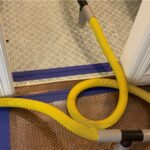
The Injectidry system works on the principle of negative pressure. Large, flexible plastic Rescue
Mats are taped to the wettest sections of the floor to create an airtight gasket. These mats are
connected by a series of hoses to a high-pressure blower unit. Instead of blowing air at the floor,
the system sucks air through the wood. This suction pulls moisture out of the wood cells and the
subfloor, moving it into the room's air where a high-capacity dehumidifier can then collect it.
Can These Systems Really Fix Cupped or Warped Floors?
Yes, in many cases, professional drying can sandlessly repair cupped floors if the response is
fast enough. Cupping happens because the bottom of the wood board is wetter (and therefore
more swollen) than the top. By using Rescue Mats to pull that moisture out of the bottom and
the subfloor, the wood can often return to its original flat shape. In Lewisville's climate,
managing this process carefully is key to ensuring the wood doesn't dry too quickly, which could
lead to cracking.
The Physics of Vapor Pressure in Floor Restoration
To dry a floor effectively, a restorer must manage the vapor pressure differential. Moisture
naturally moves from areas of high pressure (the wet wood) to low pressure (the dry air). The
Injectidry system artificially creates a low-pressure zone directly on the surface of the wood.
This tricks the water molecules deep inside the grain into migrating toward the surface much
faster than they would naturally. Without this mechanical assistance, hardwood can take weeks
to dry, which is far too long to prevent mold growth in the Texas heat.
Why Subfloor Drying Is the Secret to Success
One of the biggest pitfalls in DIY restoration is ignoring the subfloor. In many Lewisville homes,
hardwood is nailed into plywood or sits atop a concrete slab. If the hardwood feels dry but the
subfloor or slab is still at 20% moisture, that water will eventually wick back up into the
hardwood, causing the floor to cup again months later. Injectidry systems are specifically
designed to pull air through the gaps between the floorboards, ensuring the subfloor reaches a
safe dry standard.
Saving the Aesthetics: Why Replacement Isn’t Always Necessary
In the past, the standard response to a flooded hardwood floor was to rip and tear. This is
invasive, expensive, and often unnecessary with modern technology. Rescue Mats allow Hands’ Hammers to save original flooring in historic Lewisville properties or high-end oak in newer
suburban developments. By opting for in-place drying, you avoid the mess of demolition and the
difficulty of matching new wood stains to old, existing floors.
How Do We Know When the Floor Is Truly Dry?
Verification is the most important part of the drying process. We use pin-type moisture meters
with small probes that reach into the wood to get an accurate reading of the core moisture. We
compare these readings to a dry goal—usually an unaffected area of the home. We don't
remove the Injectidry system until the moisture levels in both the hardwood and the subfloor
have stabilized at their pre-loss equilibrium.
The Cost-Benefit of High-Pressure Drying Systems
While the setup of an Injectidry system is more specialized than a few box fans, the long-term
savings are massive. Replacing 500 square feet of hardwood in the DFW area can cost
thousands of dollars and take weeks of construction. In contrast, a 3-to-5-day drying project with
Rescue Mats is a fraction of the cost and allows you to keep your original floors. It is an
investment in preservation rather than destruction.
Managing Noise and Heat During the Drying Process
Injectidry systems are industrial machines; they are louder than standard household fans and
generate a small amount of heat. However, in a restoration context, this heat is beneficial as
warmer air can hold more moisture, speeding up the drying process. We work with Lewisville
homeowners to set up the equipment to minimize disruption while ensuring the fastest possible
recovery for their property.
Common Pitfalls of Waiting Too Long
The Golden Window for saving hardwood is usually within the first 24 to 48 hours. Once the
nails begin to pull through the wood (a condition called buckling), the structural integrity of the
floor is compromised. This is why immediate response from a professional team in Lewisville is
vital. If you see water seeping from between the cracks, the subfloor is already saturated and
requires professional intervention.
When it comes to drying hardwood floors in Lewisville, TX, the technology you use determines
whether you keep your home's character or face a weeks-long renovation. Rescue Mats and
Injectidry systems are the only proven ways to pull moisture from the invisible layers of your
flooring. By acting fast, you protect your investment and stop mold before it starts.
Our team at Hands & Hammers Restoration Services specializes in high-tech floor recovery
across Lewisville and the surrounding Dallas Fort Worth area. Contact us for more information
on the latest Injectidry equipment to save your hardwood from the brink of destruction.
FAQ Section
1) How long does it take to dry a hardwood floor in Lewisville?
Typically, the process takes between 3 and 7 days. This depends on the wood species, the
extent of saturation, and the ambient humidity in your home. We monitor progress daily to
ensure the fastest results.
2) Will the floor need to be sanded after it is dried?
Not always. If we catch the cupping early, the boards often flatten out entirely. If the wood fibers
were stretched, a light screen and coat might be needed later. We recommend waiting at least 2
weeks after drying before any sanding.
3) Can I use these mats on laminate or engineered wood?
Rescue mats are best for solid hardwood. Laminate and some engineered woods use
adhesives that can dissolve or delaminate when wet, often making replacement a better option
for those specific materials.
4) Is the Injectidry system safe for my home’s electrical?
Yes. Our technicians calculate the amp load to ensure we don’t trip your breakers. We use
commercial-grade equipment designed to run 24/7 safely within a residential setting.
5) Does insurance cover the cost of Injectidry drying?
Most Texas homeowners’ policies cover mitigation. Insurers prefer saving the floor over the high
cost of replacement. We provide all the moisture logs and documentation your adjuster needs.